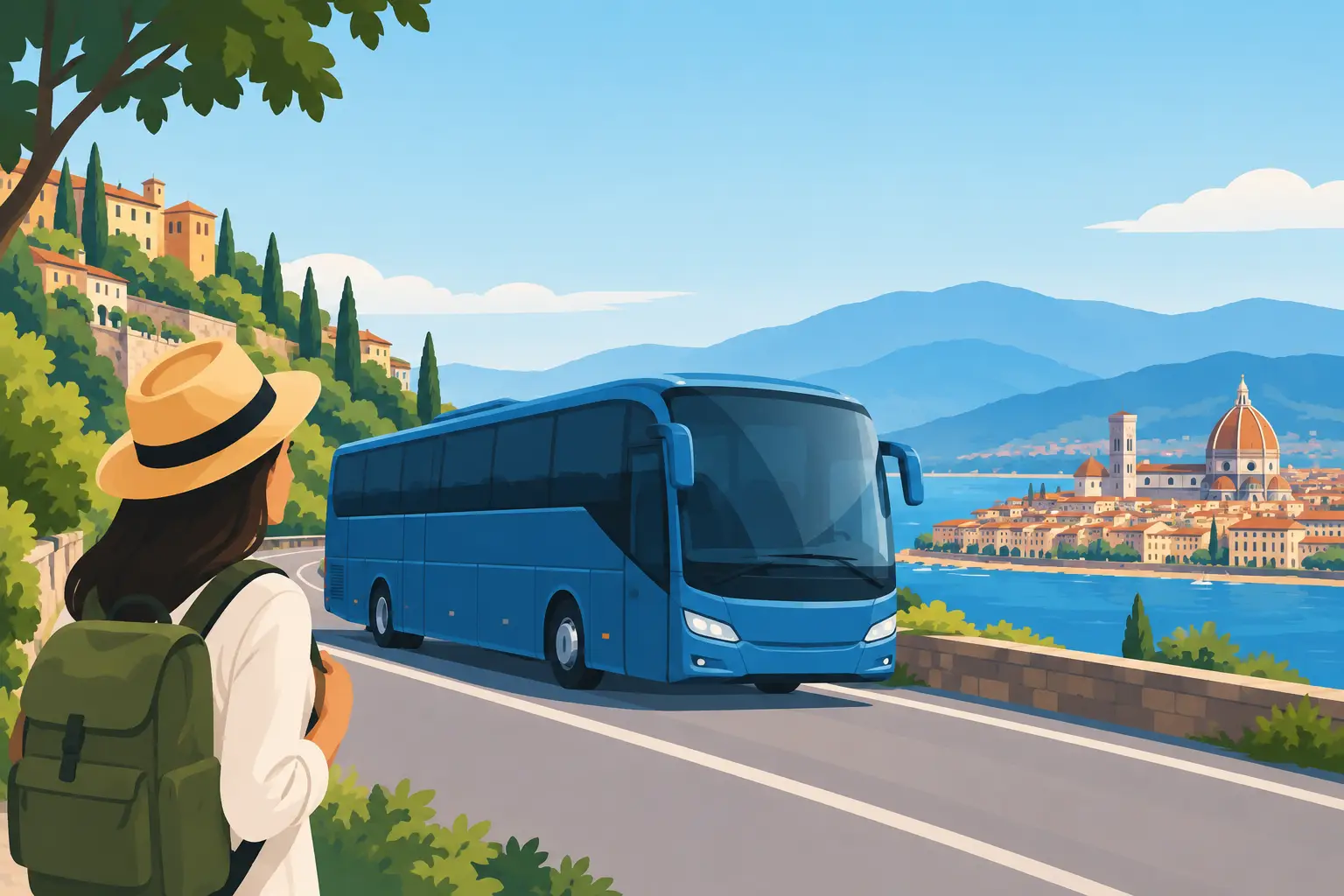
A Rome-to-Florence train may be the headline choice, but it is not always the cheapest one. For travelers building an Italy itinerary around several cities, intercity bus travel in Italy can stretch the budget much further, especially when booking late, traveling to smaller destinations, or connecting places that are not on the main rail line.
Buses will not suit every route. They are usually slower than high-speed trains and can be affected by highway traffic. Still, for flexible travelers, students, couples, families, and anyone looking to avoid overpaying for ground transportation, they can be a smart part of an affordable Italian adventure.
Why choose intercity bus travel in Italy?
Italy’s rail network is excellent, particularly between major cities such as Rome, Florence, Bologna, Milan, Naples, and Venice. But popular train routes can become expensive close to departure, and regional rail connections may involve several changes. Intercity buses often provide a lower-cost alternative with straightforward point-to-point service.
The biggest savings tend to appear on long routes, overnight trips, and journeys booked in advance. A bus can also be useful when you are moving between airports and city centers, heading south toward Puglia or Calabria, or visiting smaller places where train service is limited.
For many US travelers, the trade-off is simple: pay less and allow more time. On a two- or three-hour journey, that may feel easy. On a seven-hour trip, it depends on your comfort level, travel dates, and how much value you place on arriving early enough to enjoy the destination.
When buses make the most sense
Buses are most practical when the price gap versus the train is meaningful. If a fast train is only a little more expensive and saves several hours, the train may be the better value. But if the bus fare leaves room in your budget for a hotel upgrade, a cooking class, or an extra night in Italy, the slower ride can be worth it.
They are also useful for travelers with a flexible itinerary. Booking early generally brings the lowest fares, but bus operators may still have competitive last-minute prices when rail tickets have climbed. This makes buses a helpful backup if your plans change during the trip.
Consider a bus for routes such as Rome to Naples, Milan to Venice, Florence to Bologna, or longer city-to-city journeys where you are comfortable spending part of the day on the road. For an overnight route, a bus can reduce the need for a hotel night, though it is best reserved for travelers who can sleep reasonably well while seated.
Keep airport connections in mind
Some of Italy’s airports have train connections that require transfers, while bus services may run directly to a central station or nearby city. This can save time and simplify arrival day, particularly if you are landing with luggage or traveling as a family.
Always check the actual stop location. An airport bus may arrive at a major train station, a coach terminal, or a stop outside the historic center. A low fare is less helpful if it adds an expensive taxi ride at the end.
How to compare routes and fares
Start with your exact travel date, city pair, and preferred departure window. Compare bus options alongside trains rather than assuming one will always be cheaper. The lowest fare can disappear after adding baggage, seat selection, or a transfer to a less convenient station.
Look at the total journey, not just the ticket price. That means checking departure and arrival locations, transfer time, travel duration, cancellation conditions, and baggage rules. If your bus arrives after dark in an unfamiliar city, factor in the cost and convenience of reaching your hotel.
PacificGetways can help travelers compare transportation choices as part of a larger trip plan, so it is easier to see where a lower-cost bus makes sense and where paying extra for rail may save valuable vacation time.
Check the operator and trip details
Major coach companies and regional operators serve different routes, so schedules, onboard features, and fare rules can vary. Many long-distance buses offer air conditioning, reclining seats, Wi-Fi, power outlets, and a restroom, but amenities should never be assumed. Wi-Fi can be weak outside cities, and power outlets may not be available at every seat.
Before booking, confirm whether the route is direct or includes a transfer. A connection is not automatically a problem, but a short layover at a large station can feel stressful if you are unfamiliar with the area or traveling with children. Give yourself a comfortable buffer when your itinerary allows it.
Booking tips that can save money
Booking early is usually the simplest way to find lower fares, especially for Friday afternoons, Sunday evenings, holidays, and summer travel. Italy is busiest around Easter, late spring, August, Christmas, and New Year’s, when both buses and trains can fill quickly.
If your plans are firm, a nonrefundable fare may offer the best price. If you are building a multi-city trip before locking in flights or hotels, a flexible ticket can be worth a little extra. Read the terms carefully, because changing a ticket may involve a deadline, fare difference, or service fee.
Travel light when possible. A personal item is commonly included, while larger checked bags may be limited by size or quantity. Most operators allow standard luggage in the storage compartment, but policies vary. Keep medications, passports, cameras, chargers, and anything you need during the ride in your day bag.
Choose your seat with the route in mind
Seat selection can be a worthwhile small upgrade on a long journey. Travelers prone to motion sickness may prefer a seat near the front and should avoid reading for extended periods. If you want to sleep, a window seat may offer more privacy, while an aisle seat gives you easier access to the restroom and stretch breaks.
On scenic daytime routes, a window seat can be part of the experience. Italy’s highways may not offer the same views as a coastal train line, but you can still see hillsides, villages, farmland, and changing regional landscapes along the way.
What to expect at Italian bus stations
Coach departures are not always as obvious as train platforms. In Rome, Milan, Florence, and other large cities, buses may use terminals near rail stations or separate coach hubs. The departure bay can change, and digital signs may list the destination, route number, or operator name.
Arrive 20 to 30 minutes early for a domestic intercity departure. This gives you time to find the right bay, store checked luggage, and board without rushing. Arrive earlier during busy holiday weekends or if the terminal is unfamiliar.
Have your ticket ready on your phone and carry a backup screenshot in case your data connection is slow. Your passport is not usually needed for a domestic route, but it is still wise to keep identification accessible. Drivers may check tickets as passengers board, and luggage tags may be used for items placed underneath the bus.
Do not expect every stop to have restrooms, food counters, or seating. Buy water and a snack before departure, especially for early-morning or late-night buses. A small amount of cash is useful for a coffee or restroom fee, although cards and contactless payments are widely accepted in cities.
Make longer bus rides more comfortable
A little preparation makes a long coach ride easier. Bring headphones, a light layer for air conditioning, a portable charger, and downloaded entertainment. Mobile coverage can be inconsistent in rural areas, so do not rely on streaming or navigation apps working the entire way.
For routes over several hours, pack simple snacks and water. Stops may be brief, and there is no guarantee that you will find food that fits your preferences or dietary needs. If you leave the bus during a rest stop, listen carefully for the departure time and return early.
Keep expectations realistic. Italian intercity buses can be clean, economical, and efficient, but traffic delays happen, particularly around major cities and during summer weekends. Avoid booking a bus that arrives only minutes before a flight, cruise departure, or nonrefundable tour. A buffer protects your trip and your budget.
Buses versus trains: the practical decision
Choose the bus when it offers major savings, a direct route, or a better connection to your airport or smaller destination. Choose the train when time is limited, fares are close, or you want a more comfortable and predictable ride between major cities.
Many successful Italy itineraries use both. Take fast trains for high-value routes where time matters most, then use buses for lower-cost connections or places beyond the rail network. That mix gives you more control over what you spend without turning transportation into the focus of the vacation.
The best route is the one that gets you where you want to go with enough money, energy, and time left to enjoy Italy once you arrive.
Leave a Reply